They Built a Gravel Garden Around One Upright Stone: Now Their Bare Backyard Corner Feels Like a Japanese Retreat
Standing a tall rock in bare soil might seem like an odd starting point for a backyard garden, especially beside woods that already provide a backdrop of mature trees. Without a finished surface around it, the stone looks isolated among scattered plants and exposed earth.
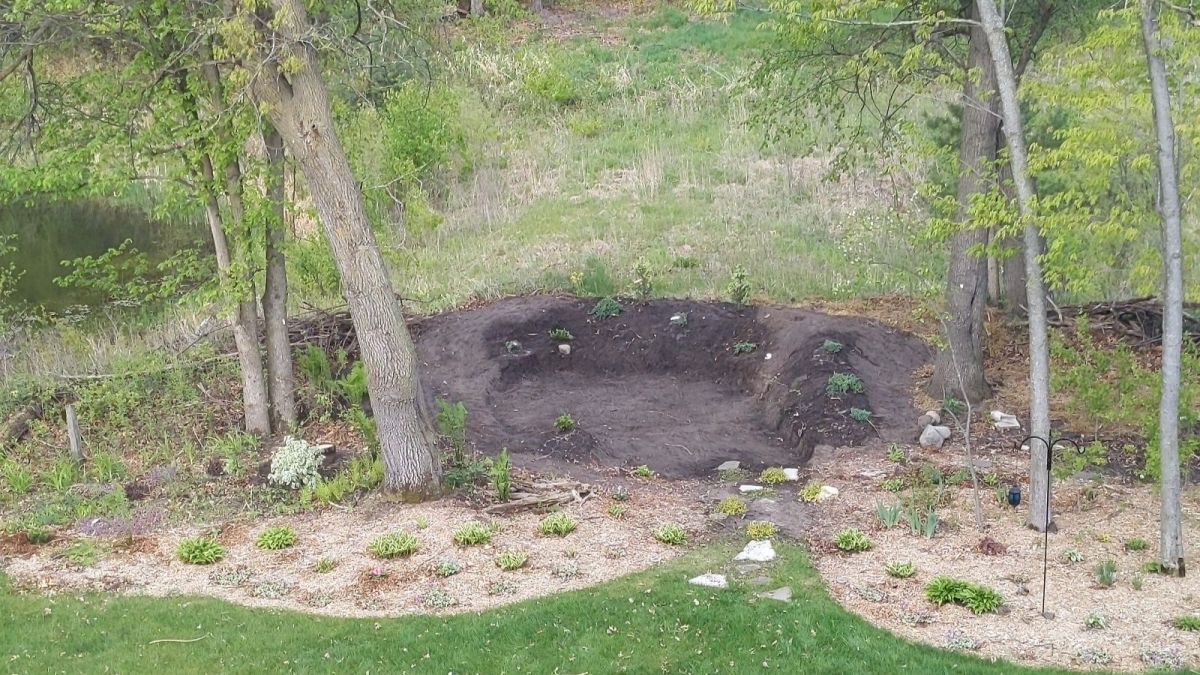
Imgur creator skardell shared the project as a Japanese-inspired garden in a woodland setting, documenting the work from the open backyard edge to the finished gravel bed. An upright stone became the focal point, with a rounded rock border, an irregular stepping-stone path, and planting arranged around the clearing.
Gravel gave those separate elements a shared setting, but the raked surface brought the design into focus. Curved lines spread around the stone, creating a feature that stands apart from the grass and wooded ground without closing off the view beyond it.
Open ground beside the woods gave the garden its setting
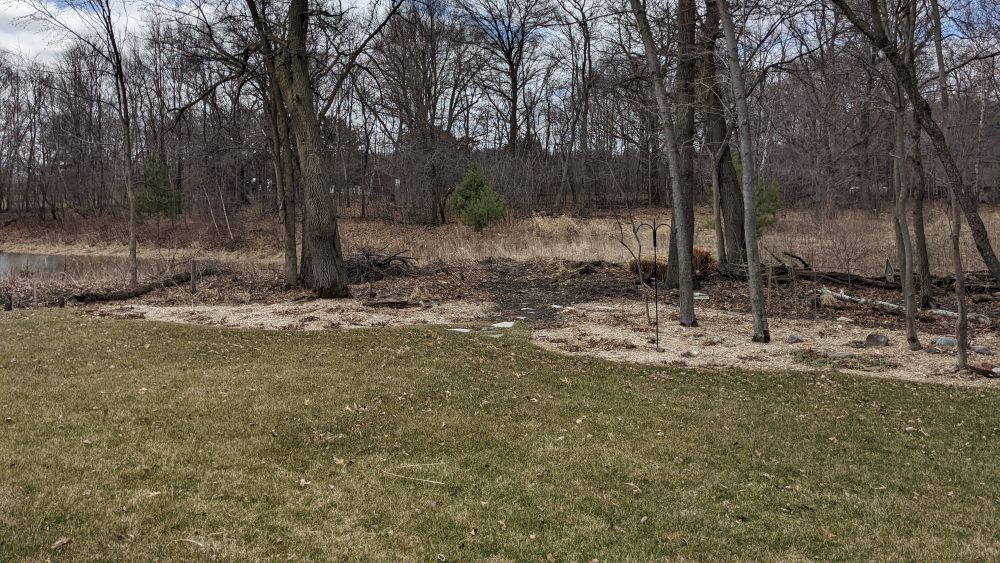
Grass met a rough woodland edge beneath mature trees, with fallen branches and low vegetation stretching across the background. There was no defined destination within the clearing, leaving the eye to pass from the lawn into the woods.
Keeping that backdrop gave the new garden an established setting from the start, while the changes took place at ground level.
Shaped soil separated the planting from the future gravel bed
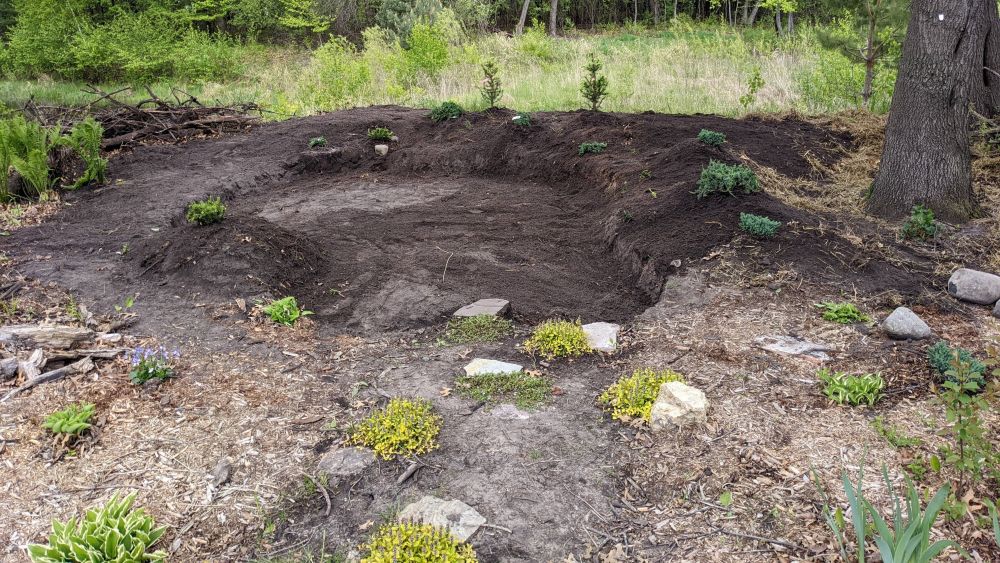
Exposed earth formed a shallow basin, with planting on raised ground around its edges. Small shrubs, leafy plants, and scattered rocks began to mark the transition between the center and the surrounding beds.
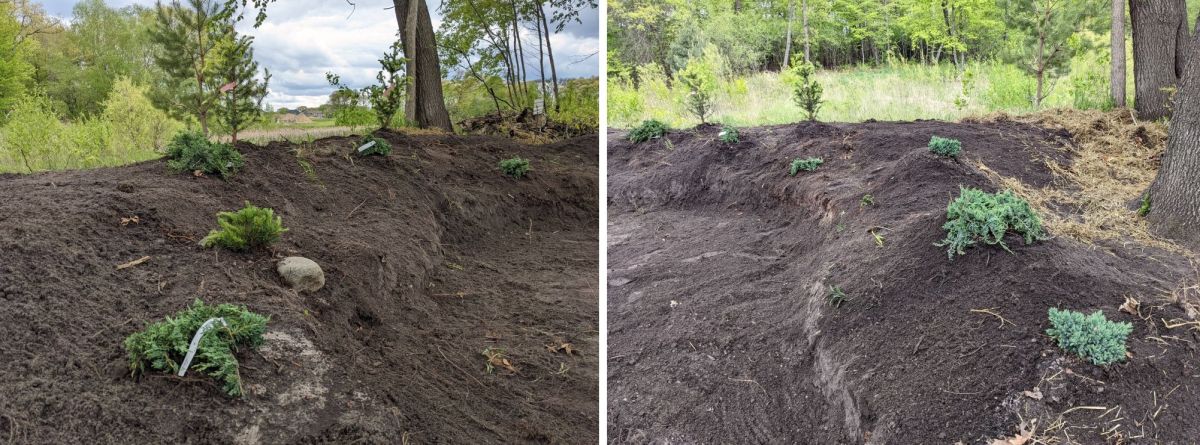
That change in height gave the layout shape before gravel covered the soil, preserving an open middle while making room for plants along the perimeter.
Rounded rocks formed a border with no straight edges
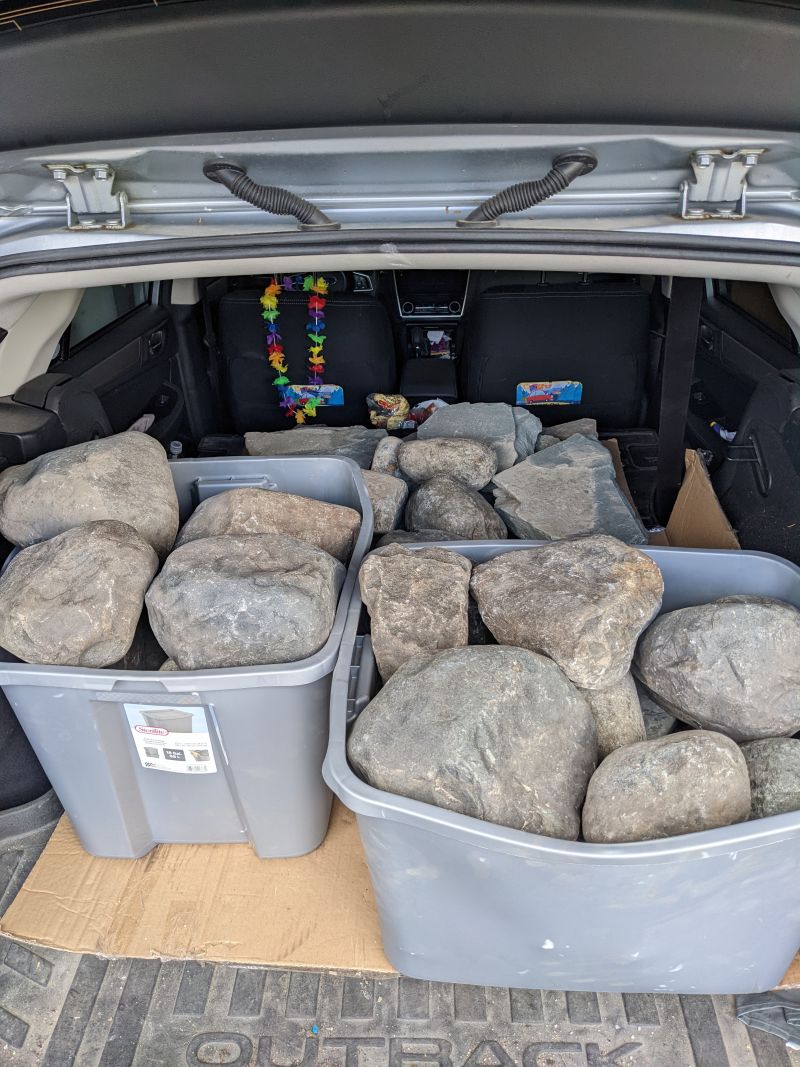
Tubs loaded with stones show the materials being transported, followed by a construction view with rocks placed along the edge of the prepared ground. Differences in size, shape, and color kept the border from becoming a uniform ring.
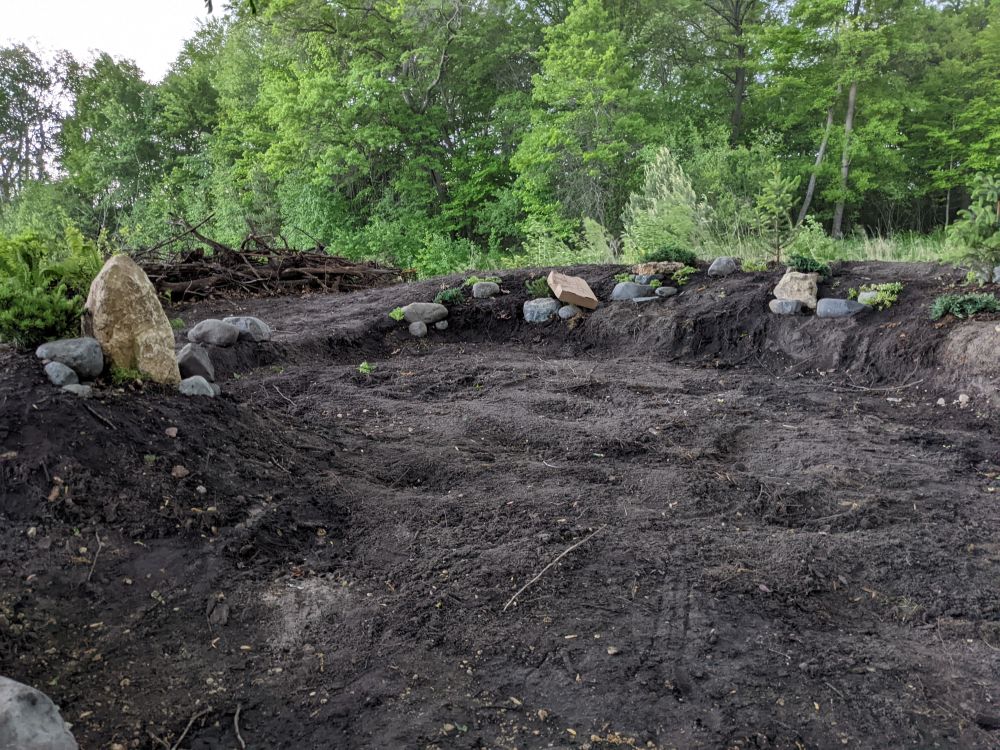
Some stones sat low against the soil, while larger pieces rose above it, giving the perimeter enough variation to connect with the rough woodland surroundings.
Flat stepping stones created a route toward the clearing
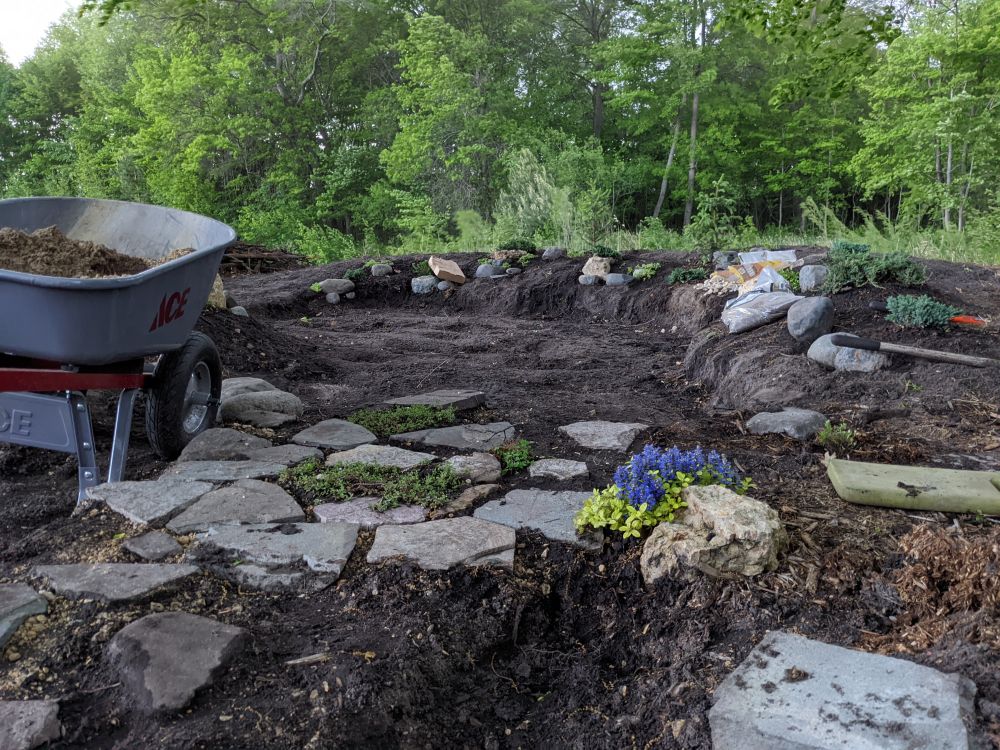
Broad, irregular slabs formed a path between the planting beds, leading from the lawn toward the upright stone. Their flat surfaces introduced a walking route through a layout dominated by rounded rocks and loose soil.
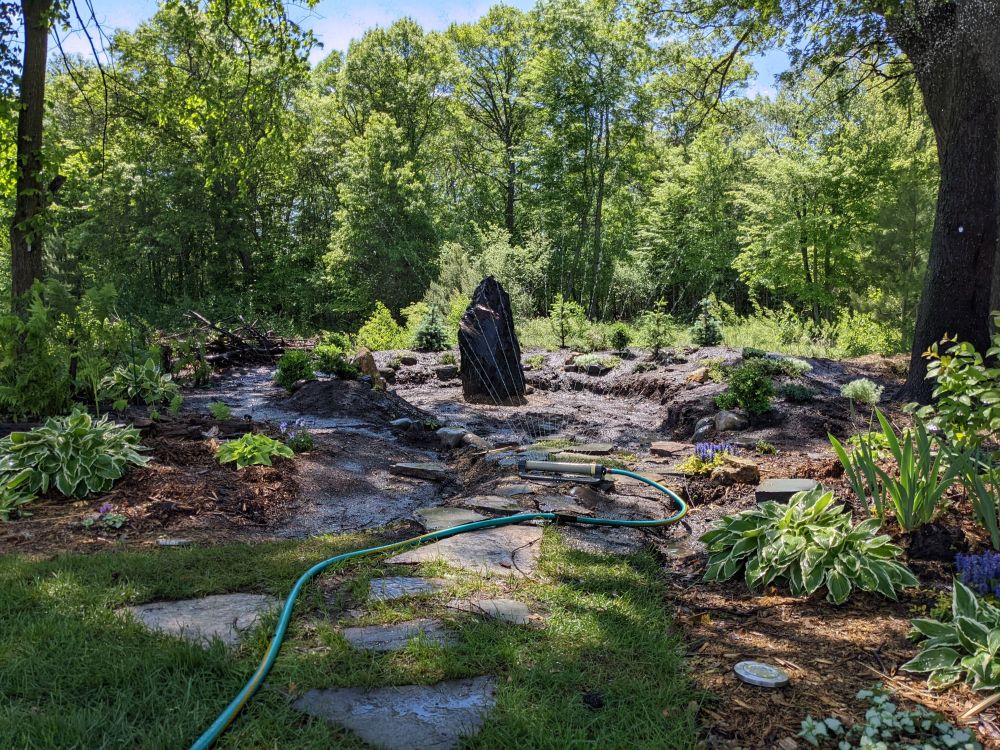
Grass and moss visible between parts of the path softened the gaps, connecting the approach to the yard outside the new garden.
One upright stone gave the low planting a focal point
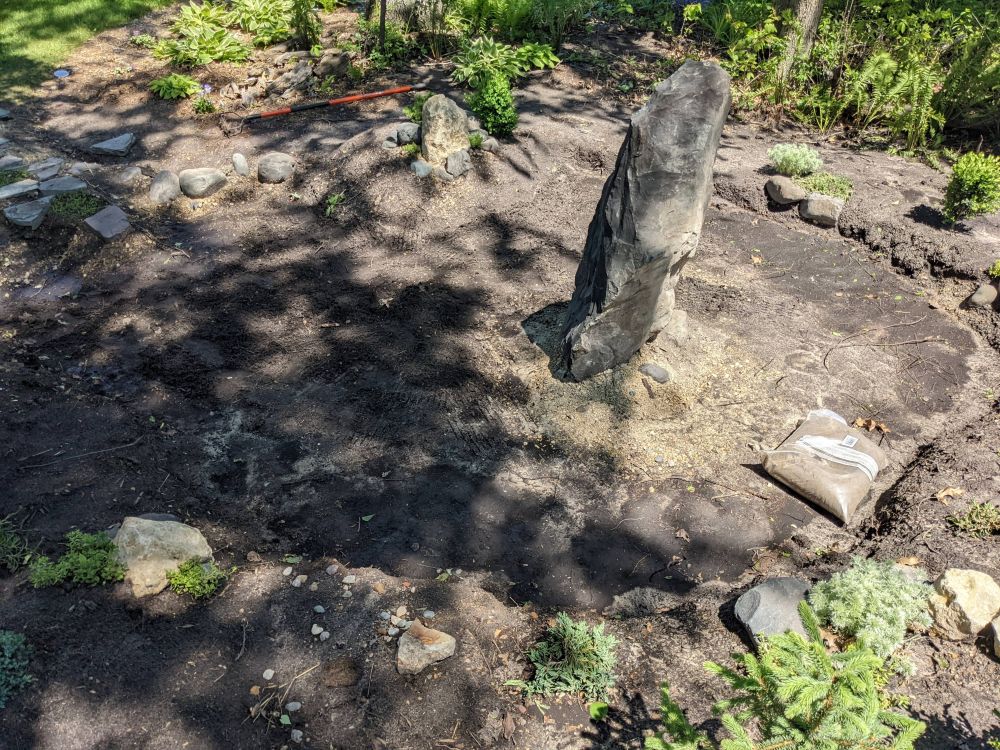
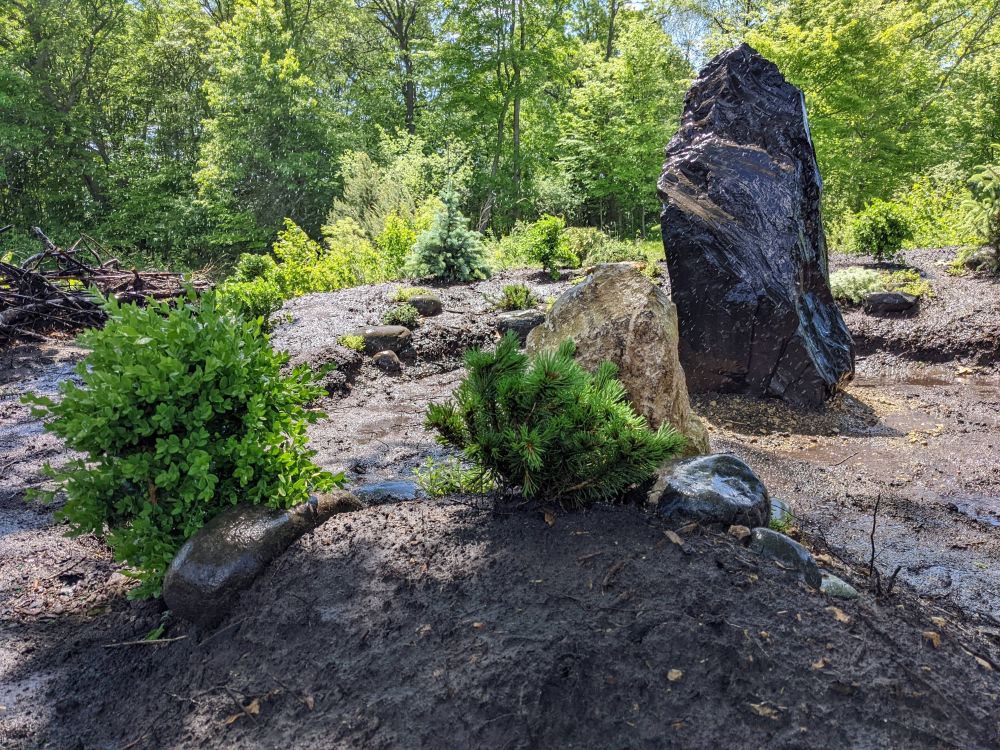
Dark stone rose above the surrounding shrubs, with an uneven peak and a rough face that caught light along its edges. Its height made it visible from the approach without requiring a large structure or a dense mass of planting.
Leaving ground exposed around the base made the placement look stark during construction, but that space would give the finished gravel pattern room to extend around it.
Fabric covered the center before the gravel went down
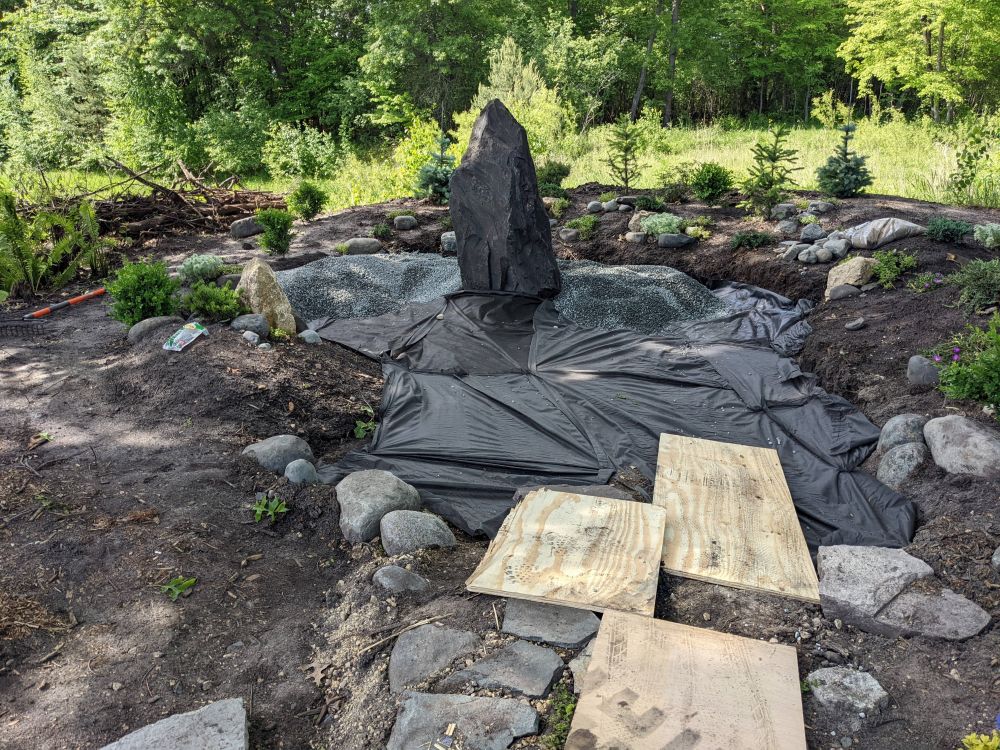
Black fabric covered the prepared surface around the standing stone, with overlapping pieces extending toward the rock border. Boards crossed the near edge, and the stepping-stone path remained visible outside the covered area.
From this angle, the future gravel bed had a clear outline, enclosed by stones and framed by planting.
Filling and leveling brought the separate pieces together
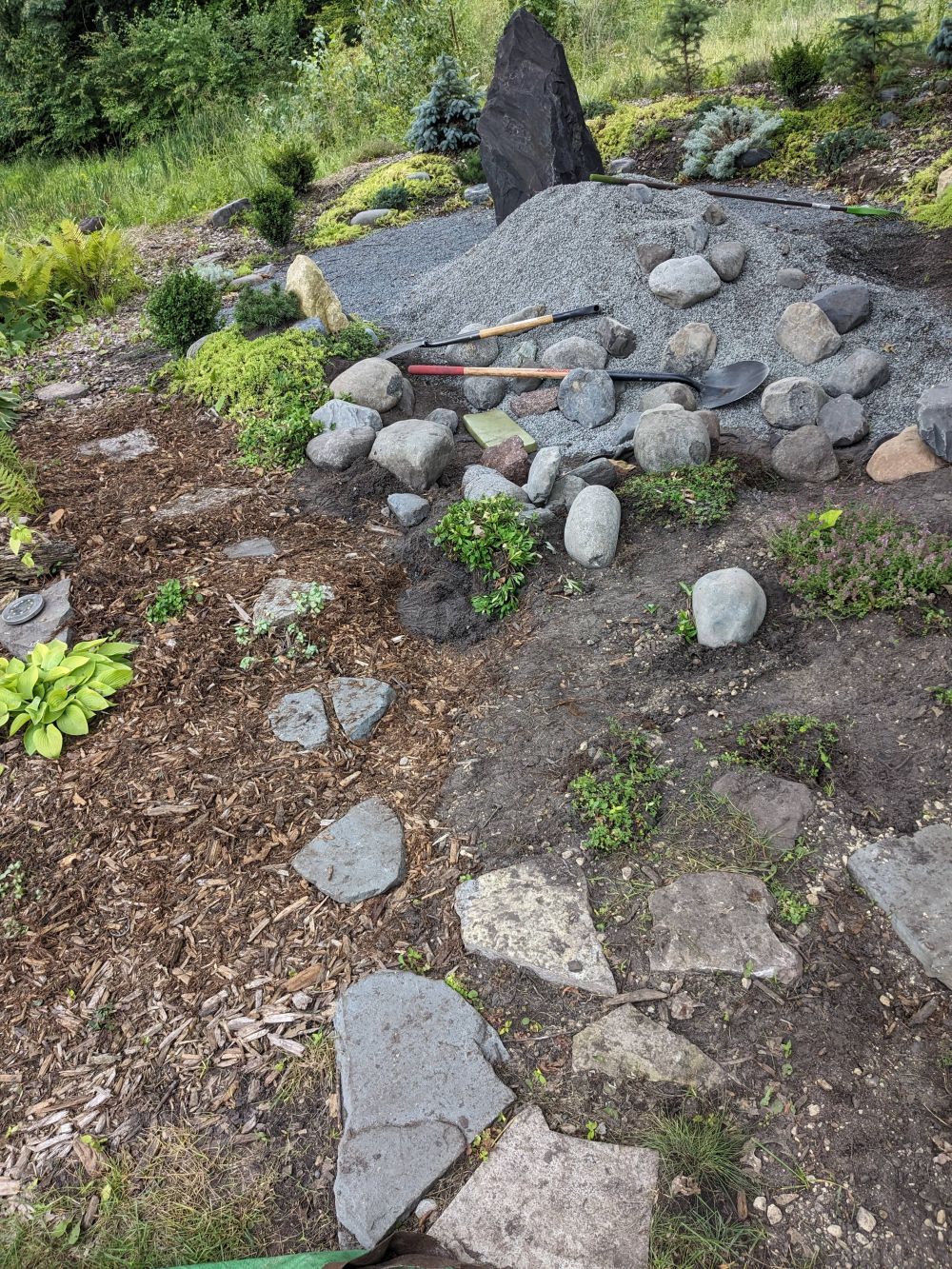
Pale gravel replaced the exposed fabric, spreading between the upright stone and the rounded border. A rake, bucket, and boards remained beside the work, while loose rocks marked sections of the unfinished edge.
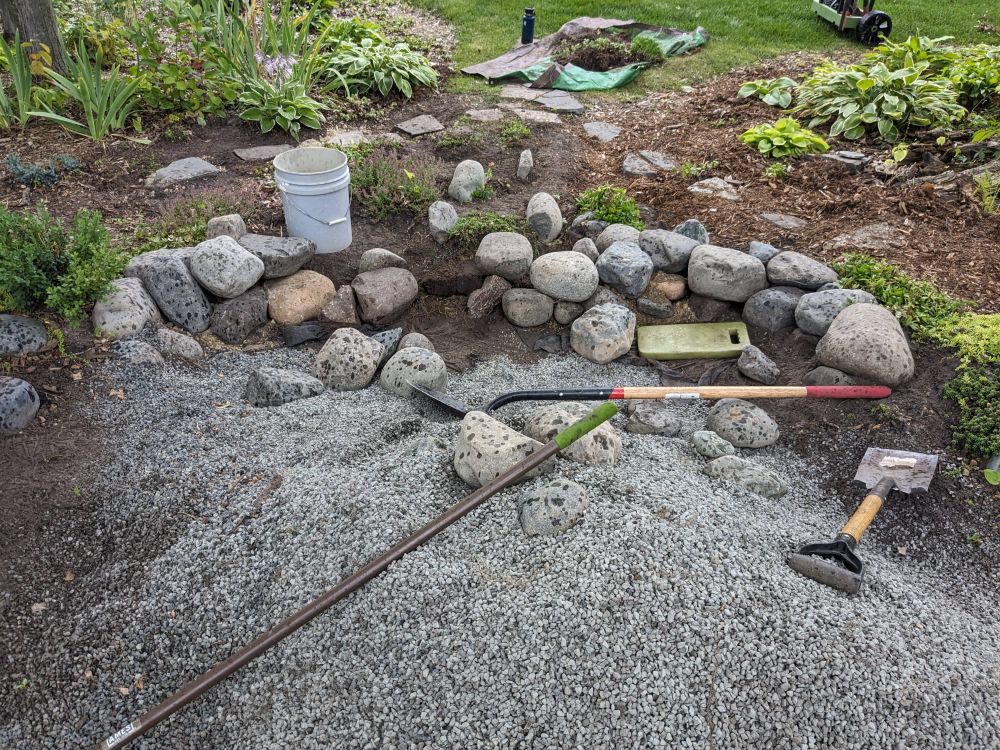
The creator captioned this stage “Filled and raked level-ish,” describing the surface before the remaining pieces returned to position. With the center covered, the difference between the gravel bed and the darker soil around it became clear.
Reset stepping stones connected the garden to the lawn
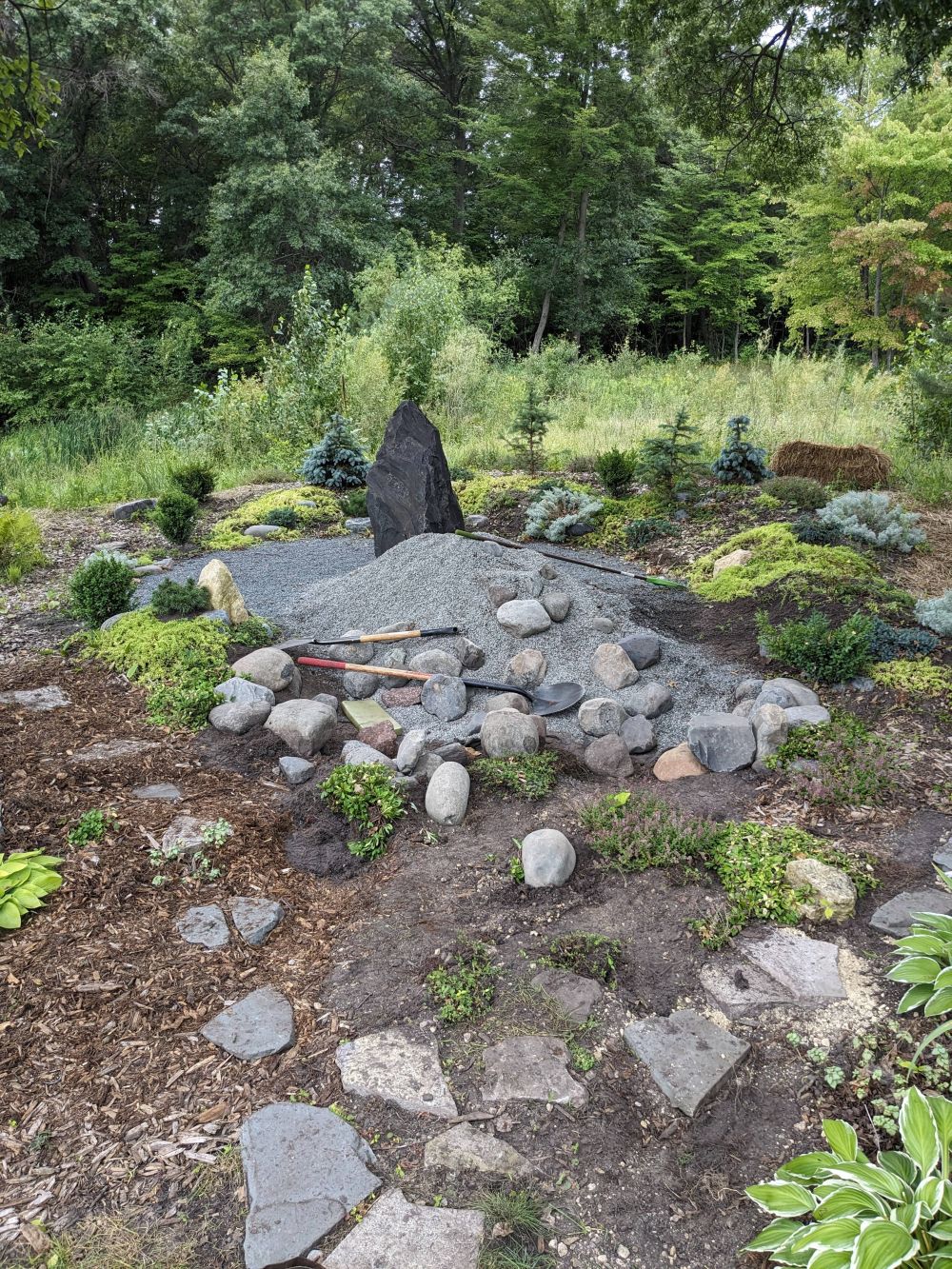
The original post notes that the steppers were put back at their new height, restoring the approach after the fill work. Pale slabs now drew a route through grass and planting toward the gravel clearing.
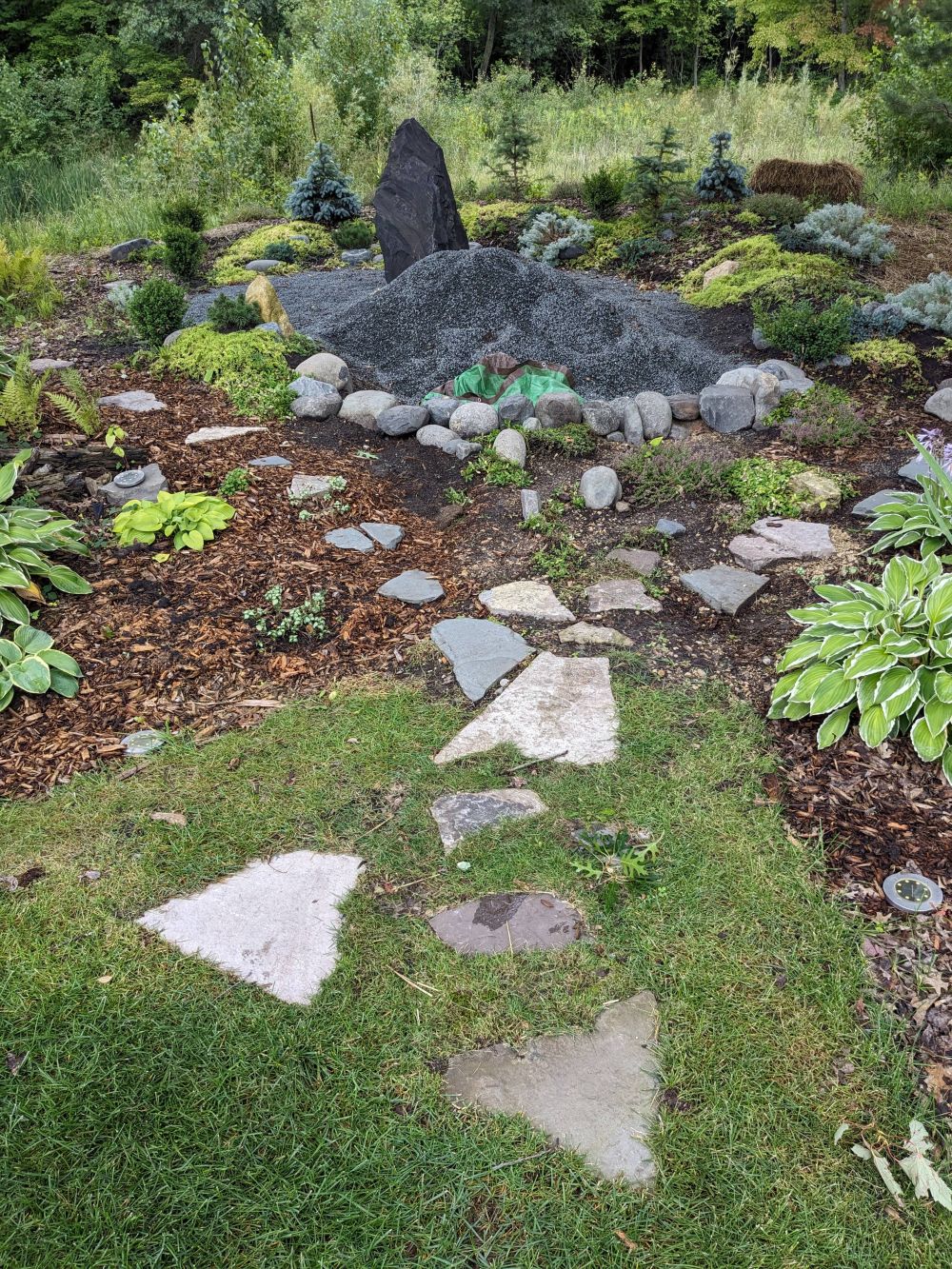
Broad leaves and low shrubs occupied the sides of the path, leaving the walking surface exposed and the view toward the focal stone open.
The finished garden kept its center open
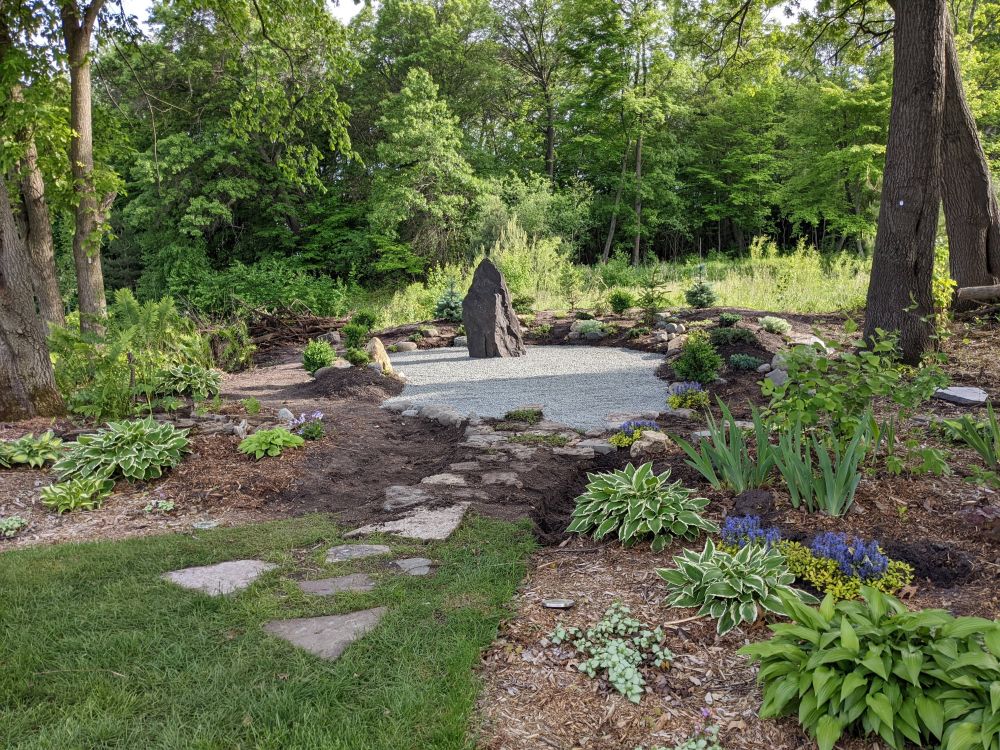
Seen from farther back, the gravel bed became a distinct clearing beneath the trees. Planting gathered around its perimeter, while the path connected it to the lawn rather than enclosing it behind a separate boundary.
The first finished post still identified plants and mulch as work to come, with more planting planned around the circle. Even at that stage, the open surface gave the garden a defined shape within the woodland edge.
Raked curves gave the upright stone its finished setting
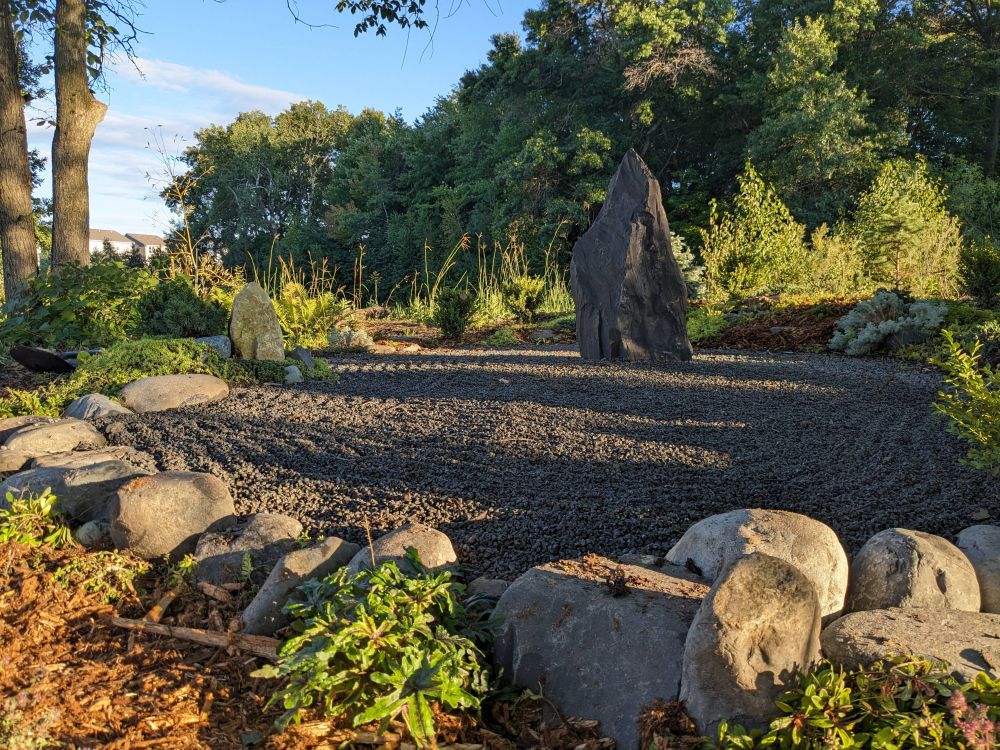
In the update, curved grooves spread across the gravel around the standing stone, with low sunlight making their ridges and shadows stand out. Rounded border rocks contained the pattern, while taller planting added depth behind it.
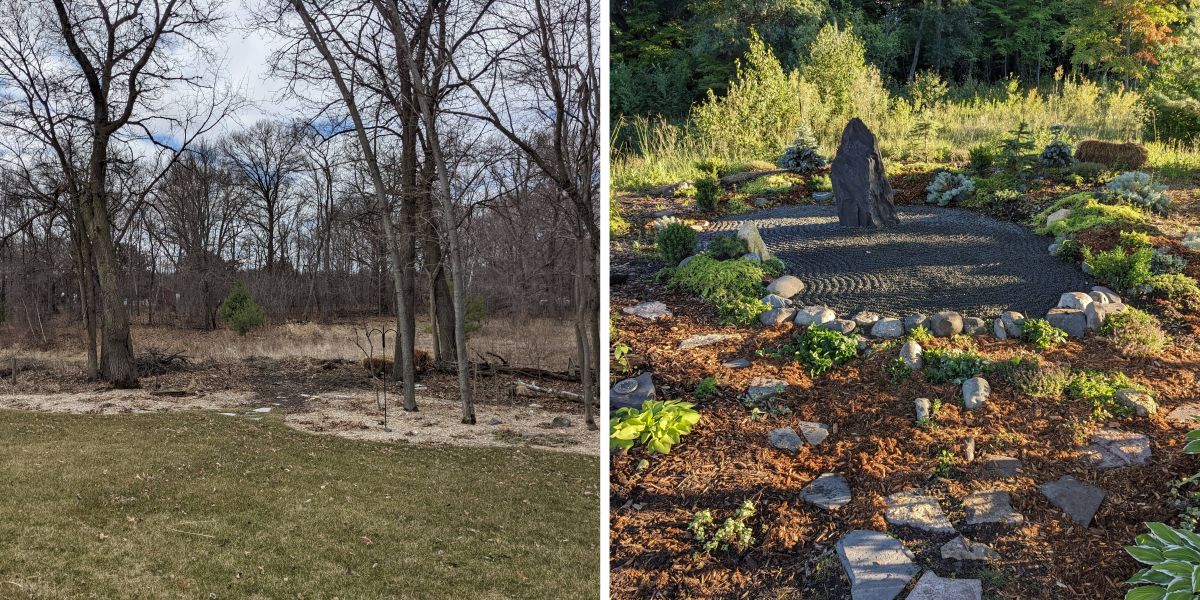
Those lines gave the open ground a purpose beyond filling space between plants. The stone supplied height, the border held the shape, and the raked gravel drew them into one composition that remained open to the woods.
What makes one upright stone look like it belongs in a Japanese retreat rather than a patch of gravel? Here, the answer takes shape around its base, where a curved border and raked lines turn bare ground into the feature that holds the garden together.
Image credits go to @skardell
The post They Built a Gravel Garden Around One Upright Stone: Now Their Bare Backyard Corner Feels Like a Japanese Retreat appeared first on Homedit.


Comments
Post a Comment