Does Pouring Boiling Water Down the Drain Actually Help, or Can It Damage Pipes?
It’s one of those habits that feels almost automatic. A pot of pasta finishes cooking, grease sneaks into the sink, and boiling water seems like the fastest way to “wash it all away.” I’ve done it plenty of times, assuming the heat would melt grease and keep pipes clear.
But after hearing conflicting advice — from plumbers, engineers, and everyday homeowners — I wanted to understand whether pouring boiling water down the drain is actually helpful, or quietly damaging plumbing over time.

When Boiling Water Can Help
There are situations where hot water does exactly what people expect it to do.
If the issue is:
- a small amount of fresh grease
- light soap residue
- shallow buildup near the drain opening
then hot water can temporarily soften the material and help it move along. This is why the method feels effective. The drain clears, the smell fades, and everything seems fine.
The key word, though, is temporarily.
Heat doesn’t remove grease from your plumbing system. In many cases, it just changes where the grease ends up.
Why Boiling Water Often Makes Things Worse
Grease behaves differently once it leaves the sink. When boiling water hits it, the grease melts and flows — but only until the water cools deeper in the pipe. Once that happens, the grease can solidify again, often farther down the line where it’s harder to reach.
This is why some plumbers warn that boiling water doesn’t eliminate grease clogs, it relocates them.
Bathroom drains have a similar issue. Hair and soap scum don’t dissolve with heat. Hot water may loosen the surface briefly, but it rarely clears the blockage and can push debris deeper instead.
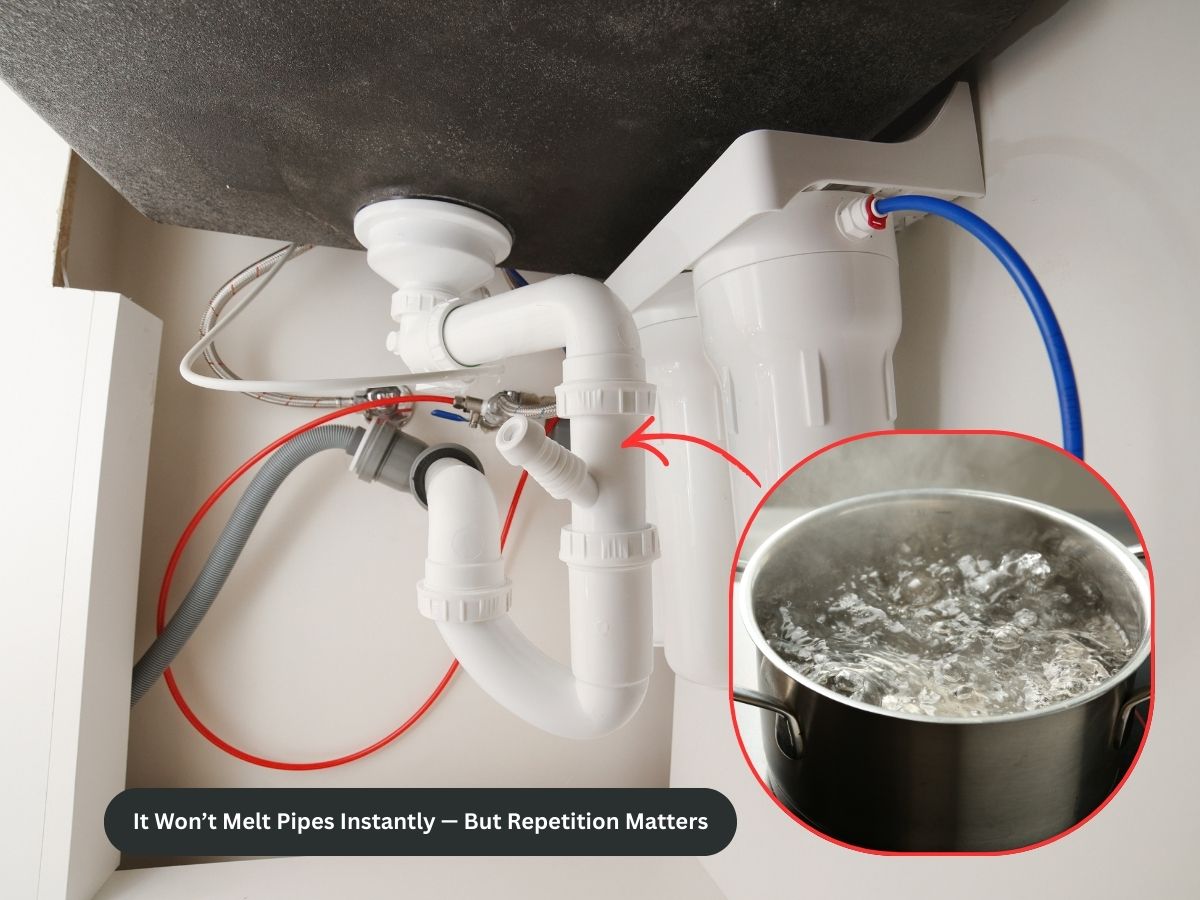
The Real Risk: Pipe Materials
This is where opinions start to diverge, and where nuance matters.
Most modern homes use PVC or ABS drain pipes, especially under sinks and inside walls. These materials are designed for hot water, but not for repeated exposure to boiling temperatures.
- Boiling water reaches about 212°F (100°C)
- Many plastic drain pipes are rated closer to 140–176°F (60–80°C) for continuous use
That doesn’t mean a single pour will instantly melt a pipe. Damage usually comes from repeated heat cycling — sudden temperature changes that stress joints, seals, and fittings over time.
In real-world cases, plumbers report:
- loosened compression fittings
- warped traps under sinks
- small leaks developing months later, not immediately
Metal pipes handle heat better, but even they aren’t immune to long-term stress at joints and connections.
Why Some People Never See a Problem
You’ll also hear from homeowners who’ve poured boiling water down the drain for decades without issues. That’s not impossible.
Several factors reduce risk:
- short pipe runs
- thicker pipe walls
- cold water already in the system
- limited frequency
Boiling water cools quickly as it travels. If it mixes with existing water, the temperature drop is significant. That’s why many people instinctively run cold water while draining pasta — not because they know the science, but because it feels safer.

A Safer Middle Ground
If your goal is maintenance, not emergency unclogging, there are safer options that still use heat.
- Use hot tap water, not boiling
- Run water steadily for a minute or two after washing greasy dishes
- Use a plunger or drain snake for slow drains instead of heat
- Avoid sending grease down the drain in the first place
For garbage disposals, cold water is often recommended because it helps grease stay solid so it can be carried out with food particles instead of coating pipes.
So, Should You Pour Boiling Water Down the Drain?
Occasionally, in small amounts, it’s unlikely to cause immediate damage. But as a regular habit or a go-to fix for clogs, boiling water isn’t as harmless as it sounds.
It can:
- move grease deeper into pipes
- stress plastic fittings over time
- mask underlying clog issues rather than solve them
Like many kitchen shortcuts, it works just well enough to feel effective — until it doesn’t.
When it comes to plumbing, gentle consistency beats dramatic fixes. And sometimes, the safest solution is simply turning the heat down a notch.
The post Does Pouring Boiling Water Down the Drain Actually Help, or Can It Damage Pipes? appeared first on Homedit.


Comments
Post a Comment