Types Of Landscaping Rocks
Landscaping rocks are durable, low-maintenance materials that serve decorative and functional purposes, from mulch alternatives to structural features. Here are 10 common types and how to use them effectively.
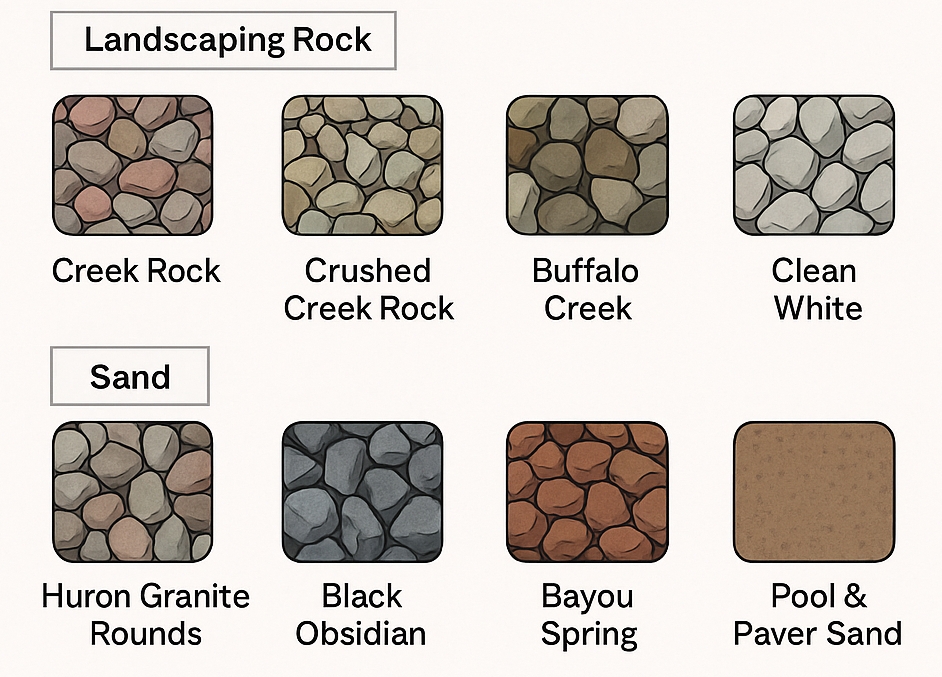
| Rock Type | Best Use | Key Features | Pros | Cons |
|---|---|---|---|---|
| Crushed Stone | Mulch, dog areas | Angular, ~1" size, from quarries | Durable, low-maintenance | Heats soil, no nutrients |
| Polished Pebbles | Water features, edging | Smooth, glossy quartzite stones | Decorative, bold contrast | Pricey, fades in sun |
| River Rocks | Dry creek beds, drainage | Smooth, rounded mix of sizes | Natural look, erosion control | Heavy, bulk only |
| Lava Rocks | Rock gardens, fire pits | Porous, lightweight volcanic rock | Retains moisture, affordable | Brittle, color limitations |
| Flagstone | Walkways, patios | Flat slabs of sandstone/slate | Durable, great for foot traffic | Installation labor |
| Cobblestone | Driveway edges, accents | Rectangular cut granite/basalt | Very tough, traditional aesthetic | Expensive, uneven for snow |
| Fieldstone | Walls, rustic features | Naturally weathered, irregular shapes | Inexpensive, local options | Heavy, irregular to stack |
| Boulders | Terracing, focal points | 12"+, varied types and textures | High impact, stabilizing | Requires machinery/pro installer |
1. Crushed Stone
- Best for: Mulch, dog-friendly zones
- Notes: Made from granite or limestone, angular edges
- Tip: Use around shrubs or drought-tolerant plants
2. Black Polished Pebbles
- Best for: Water features, patio accents
- Notes: Tumble-polished for shine, available in bags
- Tip: Pair with white pebbles for contrast
3. River Rocks
- Best for: Dry creek beds, drainage paths
- Notes: Smooth, naturally rounded stones
- Tip: Use mixed sizes for a natural look
4. Lava Rocks
- Best for: Fire pits, rock gardens
- Notes: Lightweight and porous, volcanic origin
- Tip: Combine red or black tones with succulents
5. Flagstone
- Best for: Patios, garden paths
- Notes: Flat, irregular slabs of stone
- Tip: Lay on a compacted gravel base for stability
6. Cobblestone
- Best for: Driveway aprons, rustic pathways
- Notes: Cut stone pavers; traditional style
- Tip: Use for edging if full driveway cost is too high
7. Fieldstone
- Best for: Retaining or freestanding walls
- Notes: Naturally sourced stones with rough edges
- Tip: Flat stones are easier for dry-stacking
8. Boulders
- Best for: Terracing, large-scale accents
- Notes: Heavy and visually dominant
- Tip: Bury 1/3 of a boulder for a natural appearance
9. Pea Gravel
- Use: Playgrounds, garden beds, paths
- Pros: Soft underfoot, affordable
- Cons: Shifts easily without edging
10. Marble Chips
- Use: Decorative mulch, bright accents
- Pros: Reflective, elegant look
- Cons: Can overheat soil, raises pH
The post Types Of Landscaping Rocks appeared first on Homedit.


Comments
Post a Comment